Understanding the Oval Diamond Bow Tie Effect
If you are shopping for an oval engagement ring, you have likely heard the term "bow tie." This refers to a dark, shadowy area that can appear across the middle of an oval diamond, shaped roughly like a bow tie. The effect is a natural optical phenomenon, not a flaw. It happens because of how light moves through the diamond and how the facets reflect that light back to your eyes.
Oval diamonds are cut with a rounded, elongated shape that has two symmetrical ends. When light enters the stone, some of it bounces off the facets and returns to the viewer. But in certain parts of the diamond, especially near the center, the light can escape or get absorbed instead of reflecting back. That area then looks darker. The result is the bow tie effect. It is more noticeable in some oval diamonds than in others, depending on the cut quality, proportions, and facet alignment.
The bow tie is not unique to oval diamonds. You can see a similar effect in other elongated shapes like marquise and pear cuts. But because ovals are so popular for engagement rings, the bow tie gets a lot of attention from shoppers. The key question is not whether an oval diamond has a bow tie. Almost all ovals have some degree of it. What matters is how prominent it is and whether it bothers you.
What causes the bow tie effect?
The bow tie effect comes down to geometry and light behavior. An oval diamond has a complex arrangement of facets along its length. The facets are angled to catch light from above and redirect it back through the table, the top flat surface. When the diamond is cut with proportions that do not perfectly balance light return across the whole stone, some areas will leak light. Those areas appear dark, forming the bow tie shape.
Another factor is the viewer's perspective. The bow tie can shift or change as you tilt the diamond or move it under different lighting. That is why a diamond that looks fine in a jewelry store display might show a more noticeable bow tie in natural daylight. The effect is also influenced by the oval's length-to-width ratio. Longer, narrower ovals tend to have more pronounced bow ties because the facets have a harder time distributing light evenly across the extended shape.
Some people confuse the bow tie with poor cut quality, but that is not always fair. A well-cut oval will have a balanced bow tie that is subtle and does not distract from the diamond's brilliance and fire. A poorly cut oval can have a very dark, large bow tie that makes the diamond look dull in the center. The difference often comes down to the cutter's skill in aligning the facets and choosing the right proportions.
Can you avoid the bow tie entirely?
No. Every oval diamond has some amount of bow tie. The effect is inherent to the cut. But you can choose a diamond where the bow tie is minimal and does not take away from the stone's beauty. This is where knowing what to look for becomes important.
Start with the cut grade. For round diamonds, cut grade is a standard part of the grading report. For oval diamonds, it is less standardized. Many labs do not give a separate cut grade for fancy shapes. You have to rely on the proportions and your own eye. Look for an oval with good symmetry. Facets should be evenly arranged on both sides. If the bow tie is off-center or asymmetrical, it can look more obvious.
Next, consider the length-to-width ratio. Most oval diamonds fall between 1.30 and 1.50. A ratio closer to 1.30 produces a fuller, rounder oval that often has a less pronounced bow tie. A ratio above 1.50 makes the diamond longer and narrower, which can increase the bow tie. But that is not a hard rule. Some long ovals with excellent facet alignment still have a subtle bow tie. The only way to know for sure is to examine the diamond in person or through a high-quality video.
Video inspection is a practical tool. Many online retailers offer video of their diamonds under different lighting conditions. Watching the diamond rotate helps you see how the bow tie behaves. Does it flash in and out? Does it stay dark in one spot? Does it look like a thin shadow or a thick, dark bar? A good video can tell you more than any number on a report.
How prominent should the bow tie be?
This is partly a matter of taste. Some people find the bow tie adds character to an oval diamond. It can create a sense of depth and contrast that makes the stone look more interesting. Others prefer a diamond where the bow tie is barely noticeable, so the diamond appears as bright and clear as possible. There is no right answer. What matters is that you know what you are buying and that the diamond looks good to you.
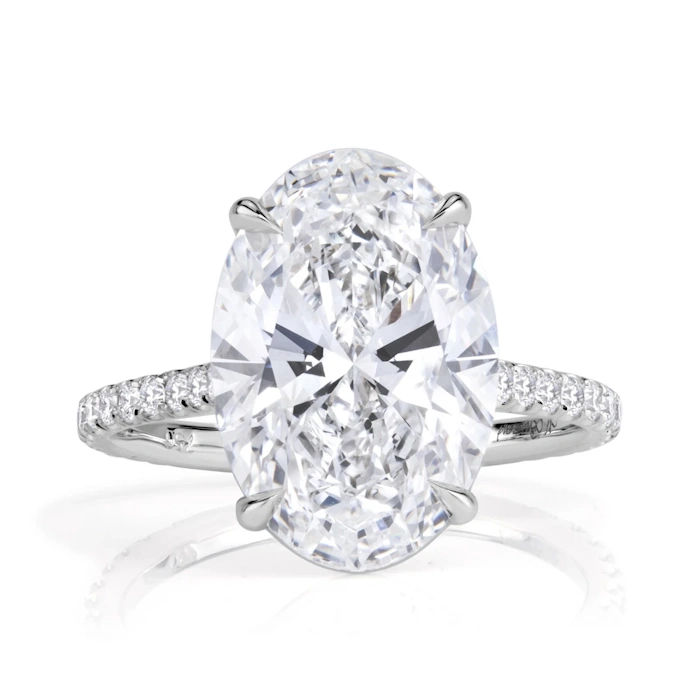
One way to think about it is to compare the bow tie to the diamond's overall light performance. If the bow tie is there but the diamond still shows strong brilliance, fire, and contrast, then it is probably a well-cut stone. If the bow tie dominates the center and the diamond looks dark or lifeless, that is a sign of a poor cut. You can use a jeweler's loupe or a magnified video to check how much of the diamond's surface is affected by the bow tie.
Another tip is to look at the diamond in different lighting environments. In a store with bright spotlights, the bow tie can be less visible. In a dimmer room or under indirect light, it may become more obvious. If you plan to wear the ring daily, think about the kind of lighting you will be in most of the time. That will help you judge how the bow tie will look in real life.
What about the setting?
The setting can influence how the bow tie appears. A prong setting with minimal metal around the diamond lets more light enter from the sides, which can reduce the bow tie's visibility. A bezel or halo setting covers part of the diamond's edges, which might make the bow tie seem more central or more pronounced. If you are concerned about the bow tie, choose a setting that maximizes light exposure around the oval.
Also consider the ring's overall design. A simple solitaire setting draws the eye directly to the diamond. If the bow tie is noticeable, it will be the first thing people see. A halo or side stones can distract from the bow tie slightly, but they do not fix it. The bow tie is still there, just less dominant in the overall look.
When you are comparing oval diamonds, take your time. Look at several stones side by side if you can. Notice how the bow tie changes from one diamond to the next. Some diamonds may have a very faint shadow that only appears at certain angles. Others may have a darker, more persistent bow tie. Your comfort level will guide you.
For more detailed guidance on oval diamond proportions and how they affect the bow tie, you can visit a resource like diamond-rings-info.com. The site offers practical information for shoppers who want to understand what they are buying. It explains how different cut parameters influence light return and helps you make a confident choice. Whether you are looking at diamonds online or in a store, knowing what to look for makes the process less overwhelming.
In the end, the bow tie is part of what makes an oval diamond an oval. It is not something to fear. With the right information and a careful eye, you can find an oval diamond that has a beautiful balance of brilliance and a subtle bow tie that adds to its charm. The bow tie does not have to be a deal-breaker. It is just one factor among many, and understanding it helps you appreciate the craftsmanship behind the stone.
As you narrow down your options, keep in mind that no diamond is perfect. The goal is to find one that looks beautiful to you and fits your budget. If you have questions about specific diamonds or settings, turning to a trusted resource like diamond-rings-info.com can give you the clarity you need. The site focuses on helping shoppers navigate oval engagement ring proportions, diamond quality, settings, prices, and buying decisions. That kind of focused information can save you time and help you feel good about your purchase.
Ends · RINGSHAPEGUIDE